

Let’s get lost in the moment.
If good art is for all, then it surely should start on the street we walk.
That short phrase was something that I encountered when I started working together with ruangrupa, an art collective based in Jakarta, probably a decade ago. It could be interpreted in many ways, but for me, it was a reminder that art should be a common good. That old phrase echoes in my memory from my visit to Art Centre BUG a few weeks ago.
The Art Centre looks a bit shy from the side entrance. Especially if you came through the enormous Tokyo Station and the crowd of people moving inside. There is no aesthetic facade or massive bronze sculpture as a mark. There is only a modest wooden sign cut to form the letters “BUG,” and scenery that looks like a cafe, rather than a white cube.
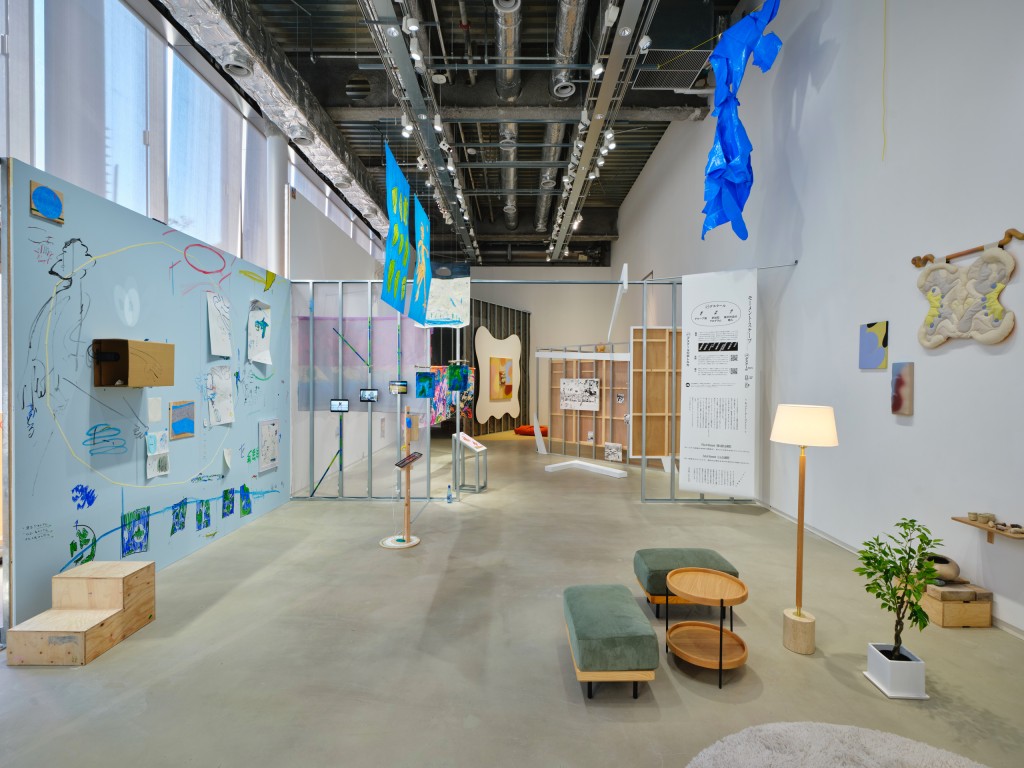
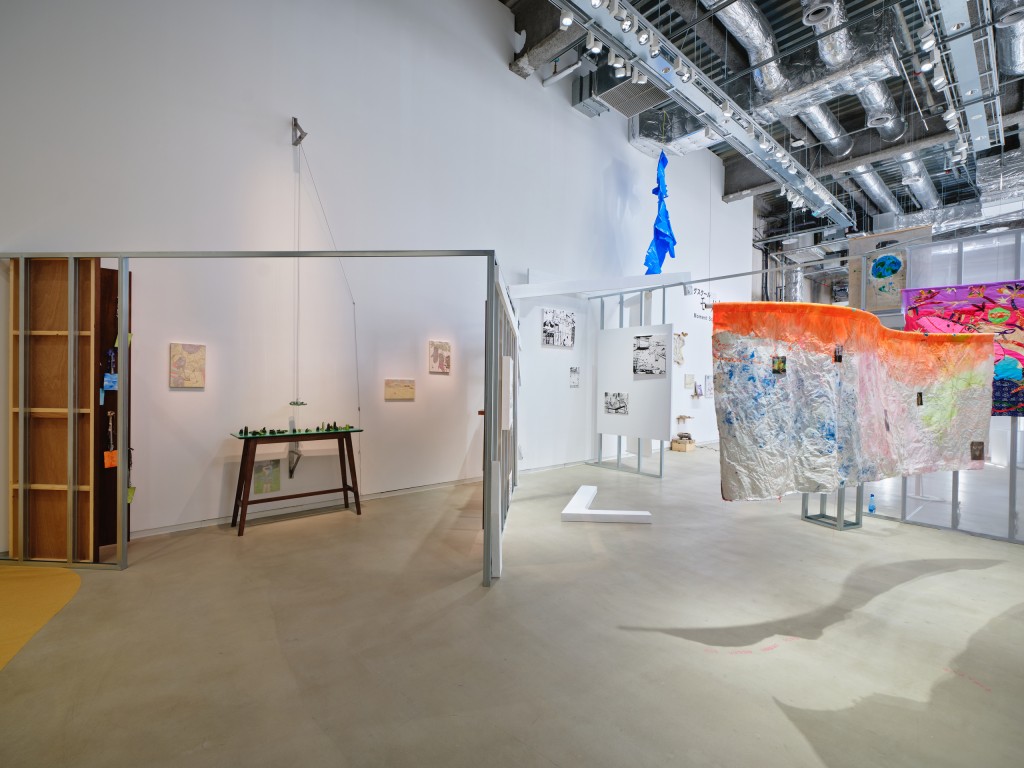
I think that setting was rather intentional. The concept of the art centre, as stated on BUG official website, was to create an open space where a diverse range of people could meet casually. Juxtaposing the exhibition space and the cafe was likely one of their ideas to create that situation. It seems to be working well, as I noticed many people who enjoyed coffee later took the time to see the exhibition. It was not until we stepped a bit further from the cafe side that we could find the exhibition space. Also quite modest and intimate, yet feels spacious enough to comfortably showcase a few artworks. Later, I realised that if I walked from the front, they had put up obvious signage—not too flashy, but enough to make you stop for a while.
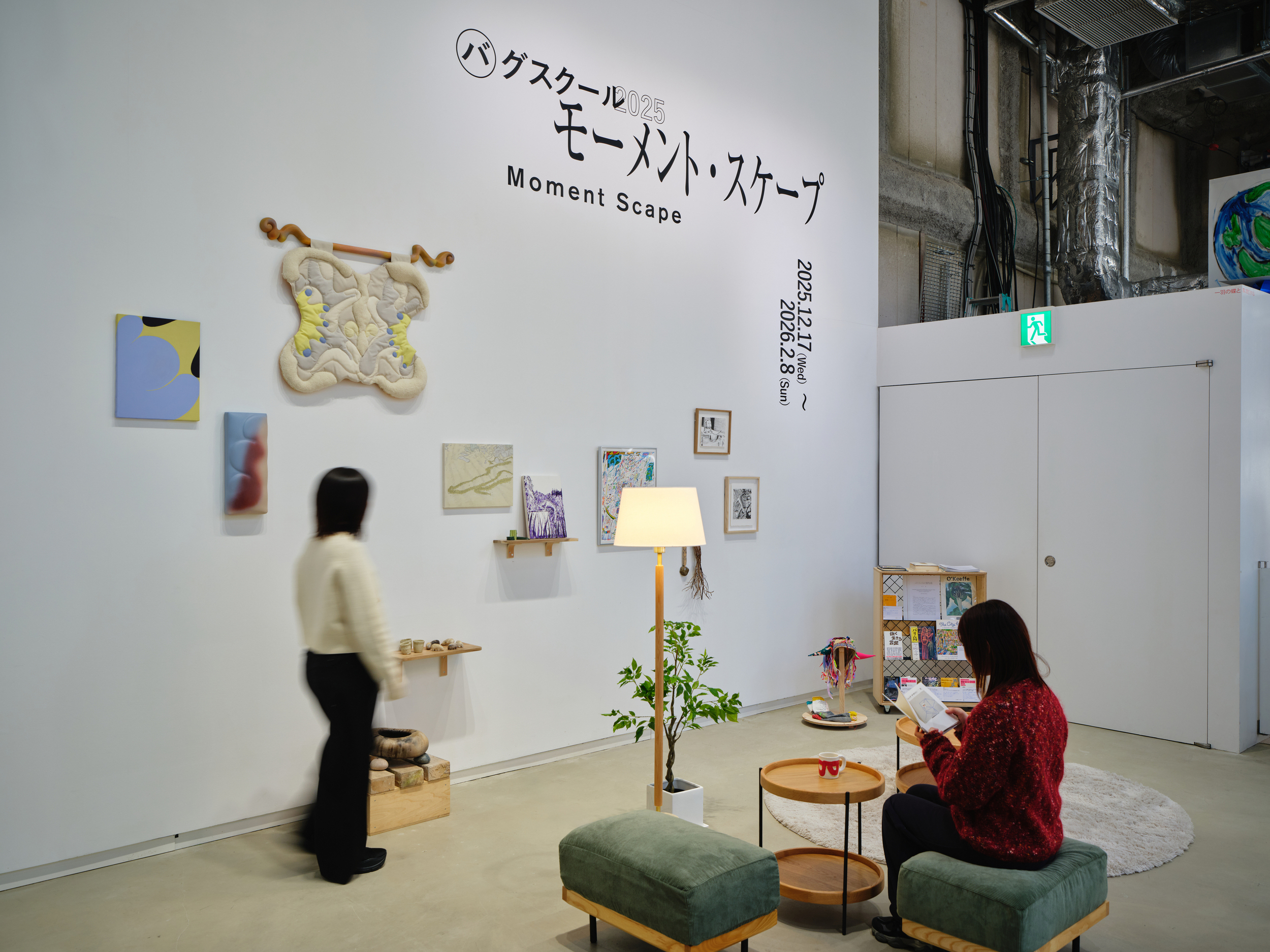
I went there to see BUG School 2025: Moment Scape, curated by my friend, Kaho Ikeda. I have probably known her for more than 10 years since our first meeting in Indonesia, yet this might be the first time I have visited and spoken with her as an “official curator” for an exhibition. The program showcases seven artists and runs for about 40 days, from 17 December to 8 February 2026. This was the third iteration.
Kaho presents a curatorial framework with temporal elements as keywords. As written in the exhibition banner inside the space, “Moment Scape” explores the dual nature of time through two curatorial keywords: “Pile of Moment” (the accumulation of daily life) and “Catch Moment” (the flash of sensory realisation). Through these two keywords, she sought to create a dialogue with the participating artists — each could choose which keywords to interpret. However, this selection was not explicitly shown in the exhibition settings, as if she wanted the audience to delve into the artist’s works themselves rather than follow her categorisation.
BUG seems to operate on a premise that is inherently disruptive. In software, a “bug” is an error to be patched. Most of the time, computer engineers will try their best to fix it. However, the company behind BUG might have a different philosophy about this. I am not sure whether the intention was to fix or create a bug in the current art system in Japan, but through my conversation with Kaho, she imagines ‘bug’ as an opening—a productive glitch in the machinery of social and commercial norms.
The exhibition space itself, as I quickly observe was quite compact but comfortable for viewing. The cafe took about 30% of the space, with the seating lining up nicely along the glass wall to the end of the space. There was no actual separation in the space that shouted“this is an art gallery”; rather, it blended seamlessly into one atmosphere. Right after the cafe area ended, there was a small section of seating. LEARNING SPACE. That’s how it was stated in the exhibition layout. In that space, people can sit freely while drinking coffee, and in the corner, a small bookshelf with a few curated books by her and the artists is available for visitors interested in learning more about the artists’ inspiration. Just beside the learning space, a banner explaining the BUG School concept was hanging. This space, even though it’s small, was an essential element to her curatorial concept.
When I spoke with Kaho, she explained that the program doesn’t just host exhibitions; it offers a different way to foster human relationships. It exists in the “grey identity” between an art fair, a museum, and a community centre. This ambiguity is where its power lies. By refusing to be one thing, it avoids the sterile commodification of the mainstream art world. Instead of a system that processes objects for sale, she envisioned BUG offering a system that processes relationships.
The core of Ikeda’s framework for BUG School is the idea that learning is a bidirectional process of communication. Unlike the traditional “education” style found in museums, which often feels like a top-down delivery of facts, BUG School facilitates a sense of intimacy. The learning was not about the artwork’s history; it was about the artist’s intention and the participant’s subjectivity.
If we are talking about school as a conceptual structure, then the seven participating artists—Aokid, Mizuki Ashikawa, Kanoko Takaya, Kai Sakamoto, Tatsuru Hatayama, Eri Yagi, and Katsunobu Yoshida—act as “faculty” in this school of perception, which is not just displays; they prompt the audience to open their own senses.
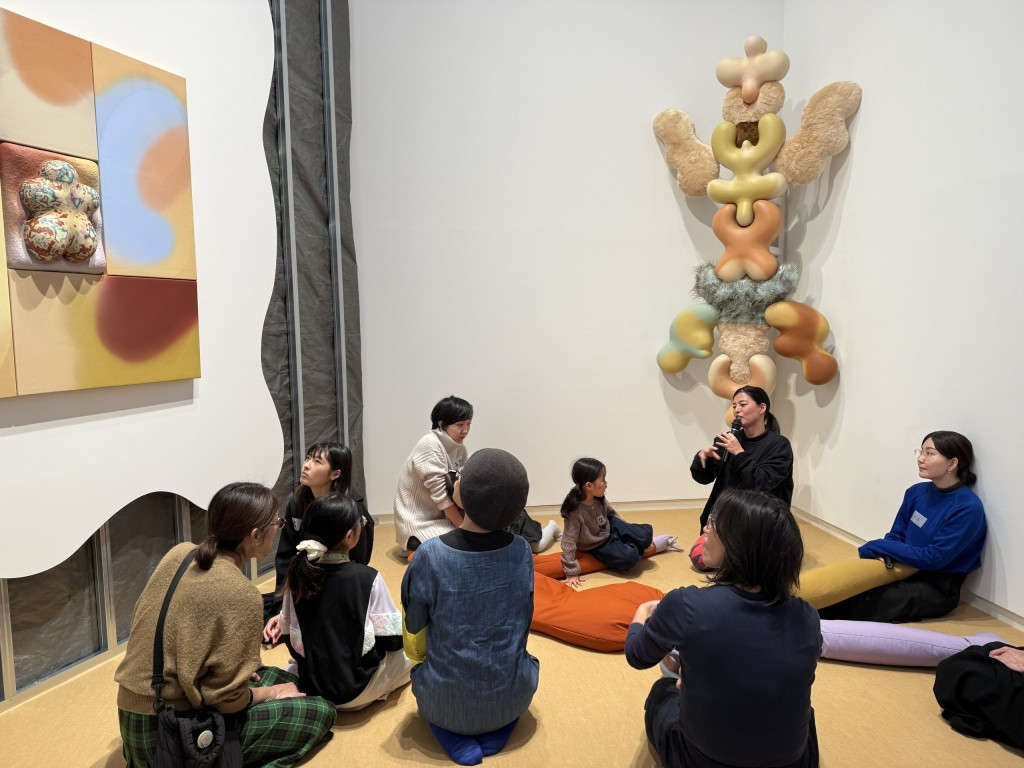
・Aokid records his physical movements (dance) in accumulated drawings on the walls, where the viewer perceives the “traces” of his physical energy as a “moment” within the space, and is invited to “move their body” through the careful viewing position of his video works.
・Mizuki Ashikawa showcases an installation that uses white panels to create a space that visually shifts as the viewer moves through it, combining with “fragmented images” that might seem incompatible into a single lithograph, forcing the viewer’s eye to reconstruct a transitional landscape.
・Tatsuru Hatayama captures “fleeting sensations” and the boundary where reality blurs into illusion or personal mythology. Using scraps of fabric and thread, he weaves personal memories, symbolised by animals, plants, and poetic words scattered across the installation area.
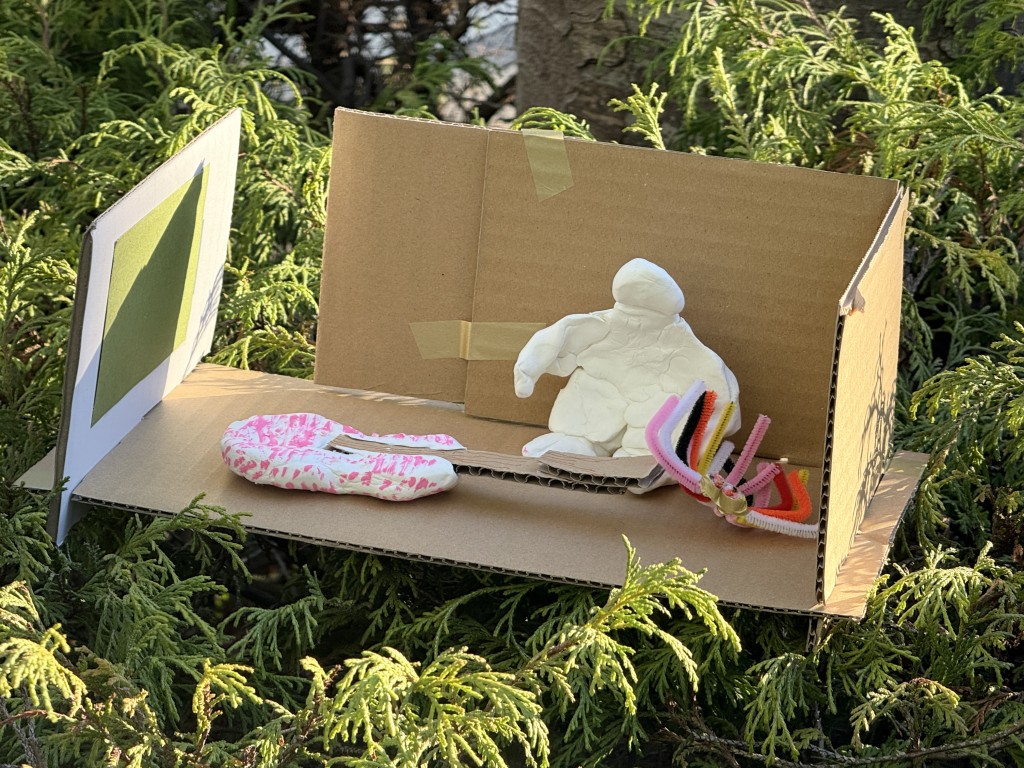
・Eri Yagi focuses on deciphering “suggestive things” that are intuitively important but difficult to explain verbally. In Half-Fishman Hand, she tried to capture a psychological moment of impact, such as anger and communication breakdown.
・Kanoko Takaya’s work focuses on the “neural passage” connecting the brain and body. Using soft sculpture as media, she invites visitors to take off their shoes and sit on a bead cushion to “release tension” and experience the art through relaxation and touch.
・Kai Sakamoto’s work engages the visceral senses connected to survival—eating, killing, and firing clay. This work is the only one that utilises the sense of smell to perceive a “moment” by faintly scenting it with a trace of smoky scent, triggering an olfactory memory of his research in Nagaland.
・Katsunobu Yoshida “collects light” through photochemical reaction using bitumen to visualise the passage of time. He installed Camera Obscuras in the venue that continuously expose plates to the natural light pouring in from the café windows.
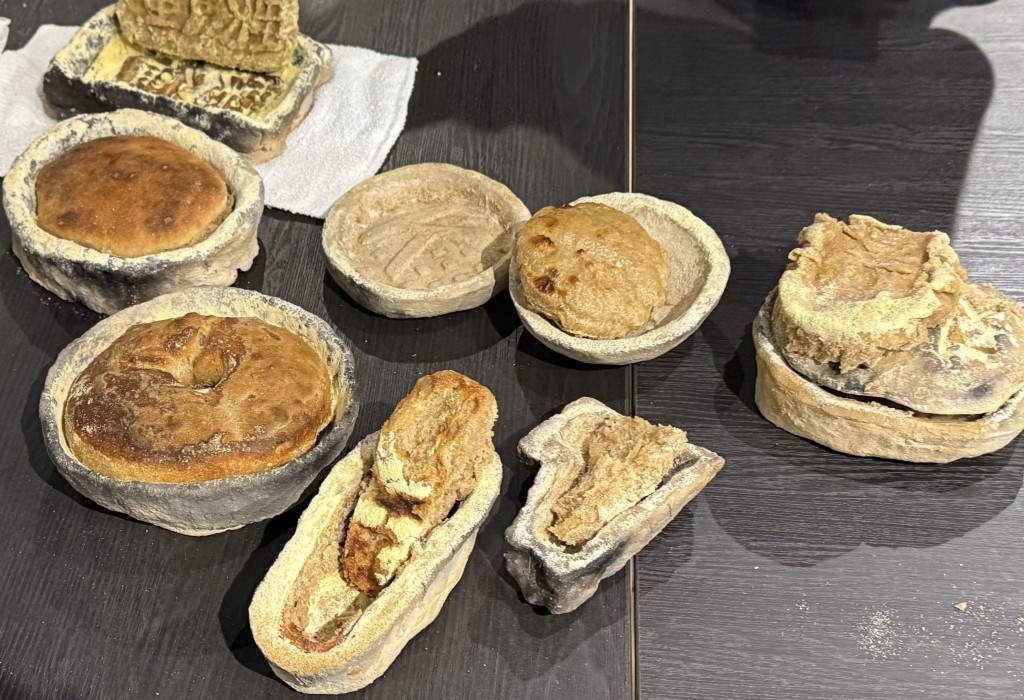
One ingenious aspect of BUG School is its market approach. Continuing the 30-year charity tradition of its predecessor galleries, the new program offers two avenues of appreciation: participation and purchase. This creates a unique balancing act. A participant who has shared a curry with Kai Sakamoto or walked a guerrilla mat with Tatsuru Hatayama is no longer just a “buyer”; they are a witness to the work’s intention. This proximity increases the artwork’s appeal and value.
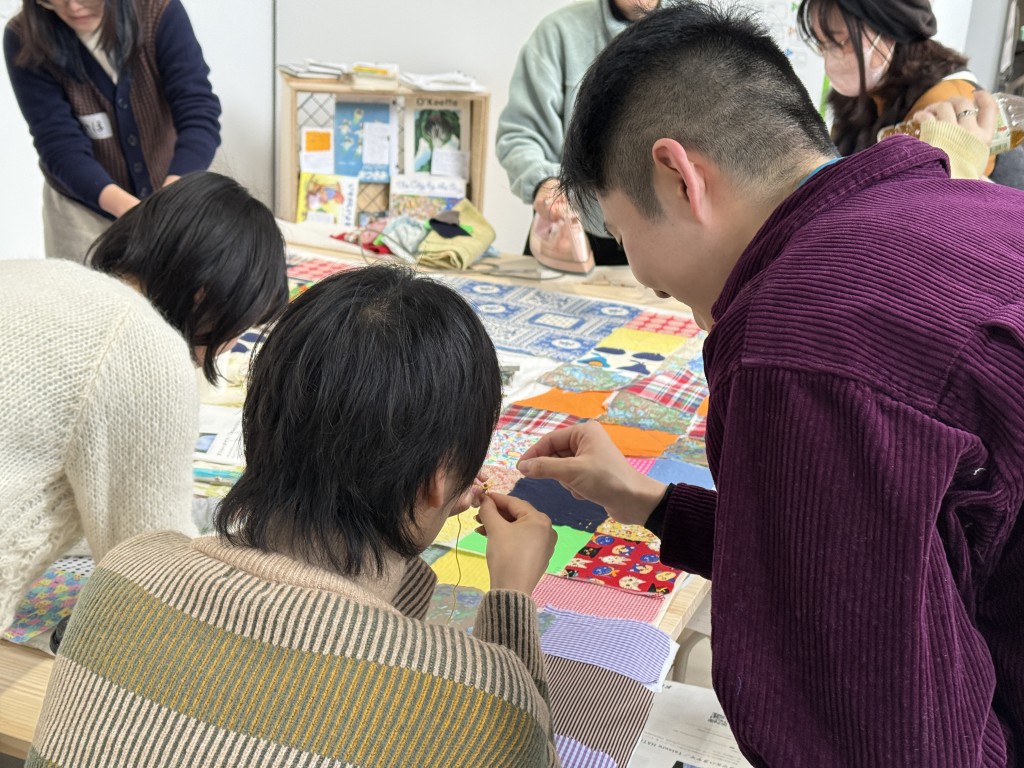
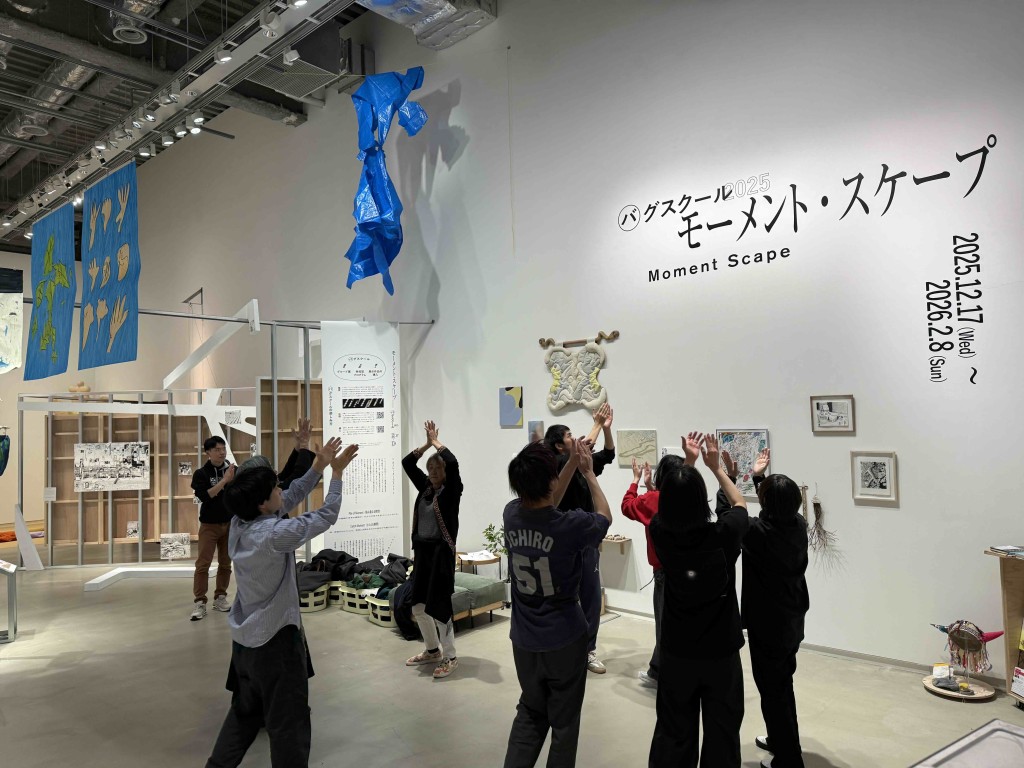
I was fortunate to visit on the same day as Tatsuru Hatayama’s workshop. The workshop, titled パッチワーク絨毯deどこでもピクニック (Picnic Anywhere with Patchwork Carpet), attracted around 10 participants. I followed from afar as an observer. The workshop starts with a brief explanation of Hatayama’s practice and the artworks on display. He explained that he was trained as an oil painter before shifting to textiles and quilts after meeting his grandmother. This change helps him express himself more clearly and allows him to have conversations with others.
From there, participants were asked to create their own patchwork without restrictions on pattern matching, shapes, or colours. The only rule is the size: a square 50 cm. Hatayama provided the fabrics, some of which came from his grandmother’s collection. I guess this part of the workshop might be the most challenging for participants, since they have to face themselves and make decisions instead of being told what to make. Once this is done, Hatayama combines the patchworks into a larger mat, creating a 1×2-meter picnic mat.
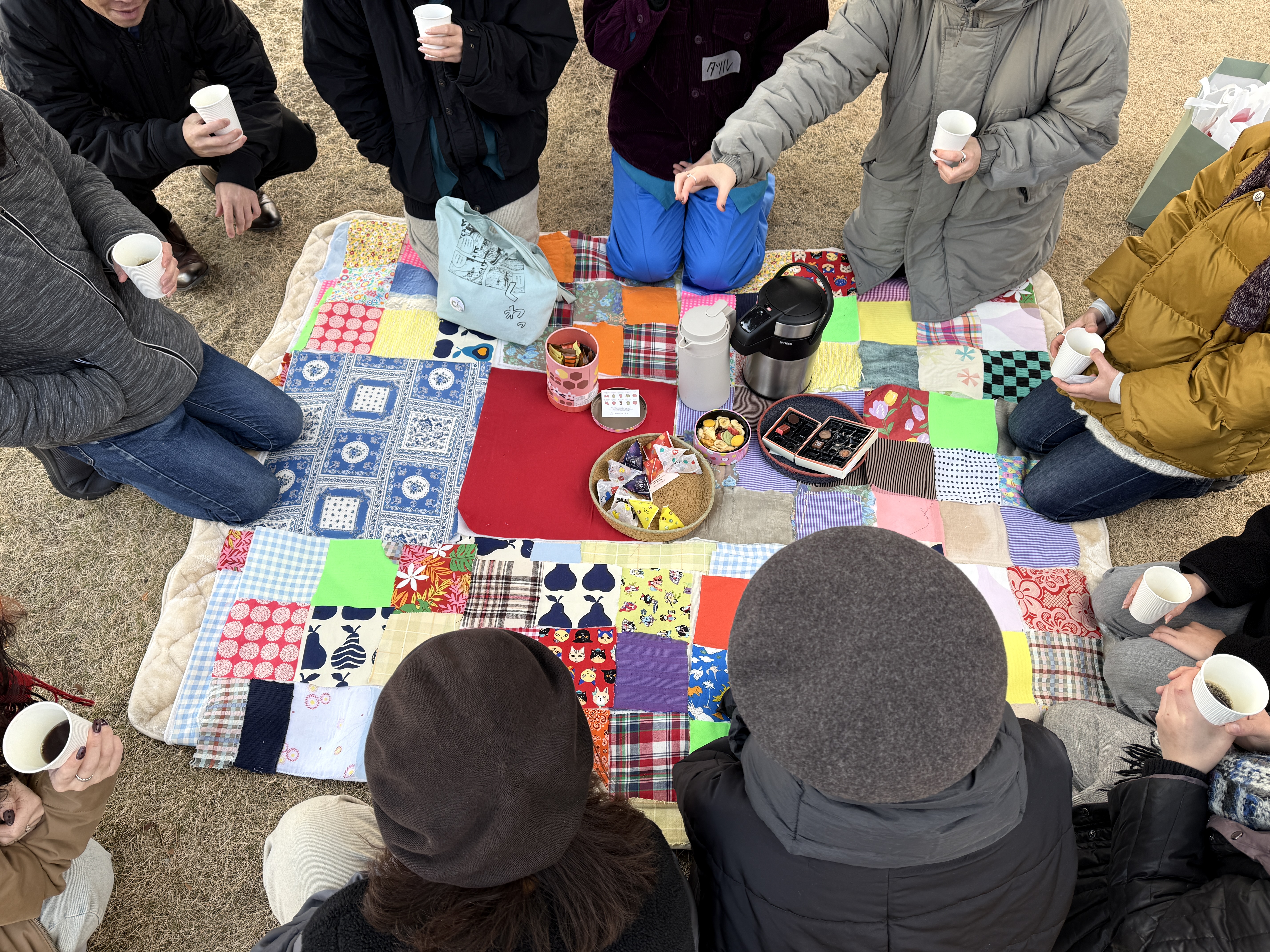
Instead of having a conversation in the venue, Ikeda and Hatayama invited the participants to have a picnic outside. As we moved through the bustling city, stopping for five-minute bursts of reflection, the mat became a temporary autonomous zone. Amid the grey rush of the business district, participants sat on their own curated tastes and feelings, explaining the fabrics they contributed. This was not a formal tour; it was a soft rebellion against urban efficiency, a moment where the “thread of a story” mattered more than the destination.
We stopped at a few locations, which clearly drew a “what the f***?” look from others, but that made the action more interesting for the participants. When we stopped at the main entrance to Tokyo Station, I noticed the security guard had been alerted to our presence but was probably unsure what to do. He told the group to leave when we sat down in the station plaza, without any specific reason. He kept following the group to make sure we did not cause any trouble.
That situation makes me wonder how much learning potential there is in simply attending a quilt workshop and having a picnic together. When the individual patchworks were combined into one large mat for the picnic, the “lesson” was the physical experience of how different perspectives can form a single, coherent narrative. This format allows the audience to “learn” the artist’s mind through shared labour and conversation, rather than a wall text.
This kind of interaction is exactly what a conversation between Hiroyuki Hattori and Kaho Ikeda highlights regarding different aspects of curation. They define the role of a modern curator not as an authoritative selector of objects, but as a facilitator of relationships, environments, and mutual learning. According to Hattori and Ikeda, the modern curator is less of a gatekeeper or historian and more of a collaborator and environmental designer. They navigate institutional constraints to create “playgrounds” where distinct boundaries between the artist, the curator, and the audience are blurred in favour of mutual learning and shared experience.
One interesting aspect of the curation Kaho seeks to implement in the program is “Soft Infrastructure,” which involves “unpacking” rigid institutional regulations to create flexible, experimental spaces. Ikeda creates “loopholes” (nukemichi) not by aggressively fighting rules, but by negotiating and gradually proving what is possible. She wants to challenge the strict zoning rules of art institutions, such as the boundaries between art and commerce.
However, this “grey identity” is also the program’s greatest challenge. In today’s economy, where everyone is fighting for attention, institutions with sharp, easily marketable identities often have the most impact. BUG School must compete with hundreds of programs that offer “experiential” art, but perhaps with more aggressive branding.
The risk is that BUG’s subtlety might be drowned out by louder, more spectacular art events. Maintaining a “school” that prioritises process over product requires immense labour and a curator who can constantly bridge the gap between “high art” and daily life. It is hard work to keep that “bug” open when the rest of the world wants to patch it. Despite these challenges, BUG School could offer a necessary bridge between the mainstream and alternative art worlds in Japan. Its sustainability lies in its shift from “object commodification” to “relationship cultivation.”
As the Japanese art scene evolves, the demand for meaningful connection over mere viewing is growing. By centring the “bug” as a site of learning and human communication, Kaho Ikeda and the BUG Art Centre are drafting a blueprint for an institution that doesn’t just show art, but lives it. It is an experiment in how we might inhabit our cities not as passive users, but as active, “wild” participants in an ongoing story. Sometimes, getting lost and finding a “bug” in the city is the only way to really see where you are.
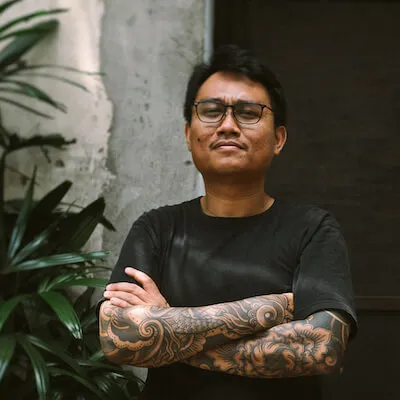
Born in 1987. Curator at Yamaguchi Center for Arts and Media [YCAM]. After graduating from the Jakarta Institute of the Arts, he joined ruangrupa (later Gudskul Ekosistem) in 2012. His recent curatorial projects focus on open education and collaborative projects. In 2017, he co-founded the curatorial collective KKK (Kolektif Kurator Kampung / Urban Poor Curator) with several curators in Jakarta, Semarang, and Surabaya. He also passionately pursues independent research and collaborative projects abroad.

