

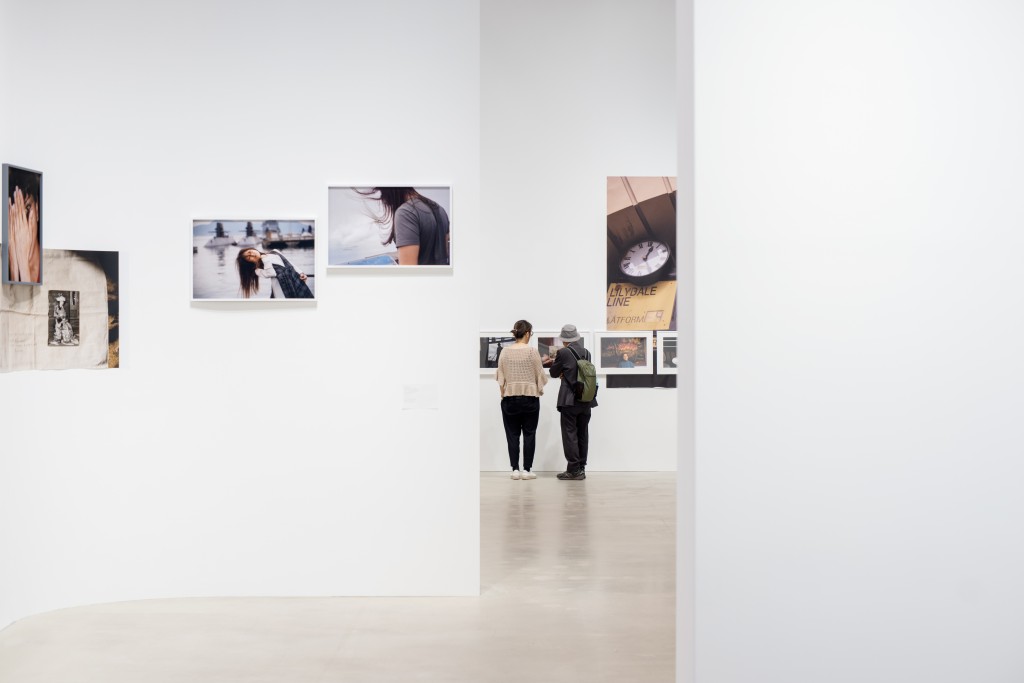
Art Center BUG, operated by Recruit Holdings Co., Ltd., is pleased to present Forget Me Not, a solo show by Aya Fujioka opening on Wednesday, October 14, 2026. Recruit has supported Fujioka since early in her artistic career, selecting her to participate in 1996’s Face of Humanity Photographic Project held at Guardian Garden—an earlier iteration of Art Center BUG, and the artist’s debut exhibition— with a series of photographs from her daily life entitled Namida tsubo [Jar of tears]. This relationship continued with her selection for the 24th Hitotsubo Photography Exhibition in 2005 for Saudade, a series of photographs about her grandmother’s experiences as an immigrant in Brazil, and the exhibition of her 2017 solo show Aya, and her metaphysical study.
With Forget Me Not,the internationally active Fujioka presents a new series that has been commissioned by BUG. Nine years ago, Fujioka received a single message from a woman living in Melbourne, Australia regarding the existence of a certain Japanese woman. This launched a creative project that spans the postwar-era to the present and bridges the immense distance between Fujioka’s hometown of Kure (Hiroshima) and Australia, a project where mysteries multiply with every new discovery, and truth is indeed stranger than fiction.
Just as Saudade traced her grandmother’s footsteps through São Paulo, Comment te dire adieu recorded her own travels throughout Europe, and Life Studies was born out of the five years the artist spent living in New York, so too does this series seem to lead Fujioka on a global journey, one told from the stories interwoven through the viewfinder of her camera to produce an exhibition that marks a shifting tide in her work.
Exhibition Highlights
A Fresh Series Of All-New Material, And A First Foray Into Video-Art
The present exhibition revolves around a completely new series by Fujioka titled “Forget Me Not”, which includes her very first attempt at video-art.
The work, which took three years to conceive and produce, deals with an unsolved incident that actually happened to the artist. As an involved party, the artist witnessed the reality of a situation—whose outcome even the artist could not predict—carved out moment by moment through her choices and the press of the shutter. Rather than being a documentary or a journalistic report, the experience rather aligns with the characteristics of a “non-fiction novel”—often defined by the particularities of “① the author not appearing in the work; ② the author’s perspective being conveyed through choices; and ③ creative processing becoming a necessity”*—
The exhibition is constructed using an ambivalent approach: it presents material grounded in the definitive facts of photography while simultaneously presenting it as a story that stirs emotions.
The Lives Of Women Who Tie Together Kure, Melbourne And São Paulo
Hiroshima Prefecture, Fujioka’s hometown, once ranked first nationwide in the number of people who emigrated overseas. Fujioka’s grandmother herself was born in Brazil as a second-generation (nisei) immigrant. When she was 20 years old, a lottery ticket her parents bought happened to win, and the family returned to Japan—specifically to Kure, Hiroshima—. After receiving a message from a woman living in Melbourne, Australia—who was searching for a woman named Kimiko Fujioka, whose name differed from her grandmother’s, Kimie Fujioka, by a single Japanese character —Fujioka set out for Kure and Melbourne to solve the mystery of who this woman with the one-character difference—who wasn’t her grandmother—could be.
The journey to find Kimiko—whose very existence was uncertain—drew in a variety of people; their wild speculations flew back and forth, and the experience touched on the human absurdity often found amidst both laughter and tears.
Fujioka turned her gaze to the postwar history of Kure and Melbourne, the lives of the women who lived through that era, and the present state of Kure—a regional city that once flourished as a military port and, after the war, as a coastal industrial zone, but is now in decline.
A central theme of this exhibition is the capturing, through Fujioka’s lens, of the lives of all of those women—lived with resilience despite being swayed by chance and necessity—and the cities in which they spent their days.
Photography Is Something That Can’t Be Undone.
Aya Fujioka, who has often employed “snapshots” as a photographic technique in her work, has described the irreversibility of capturing what she sees in an instant with a small camera—which inevitably captures even things she did not see—as “something that can’t be undone.”
In creating the works for this exhibition, Fujioka encountered photographs preserved in a private home and undertook a creative process centered on what we could call “found photographs”. Although found photographs share the anonymity of their subjects with snapshots, the mystery of “who” they are hangs more heavily in the air than in snapshots.
Through photographs from the distant past, where even the subjects are unknown, complete strangers meet and interact; yet the more they try to solve the mystery with them, the less they serve as a clue and the more they become the mystery itself. When photographs—which were once merely captured—transform into something to be unraveled, the meaning of photographs “that can’t be undone” also undergoes a profound change.
*As elucidated by translator Naotaro Ryuguchi, on the “Commentary” section of his translation of Truman Capote’s “In Cold Blood”, p. 557 (Shinchosha, 1978)
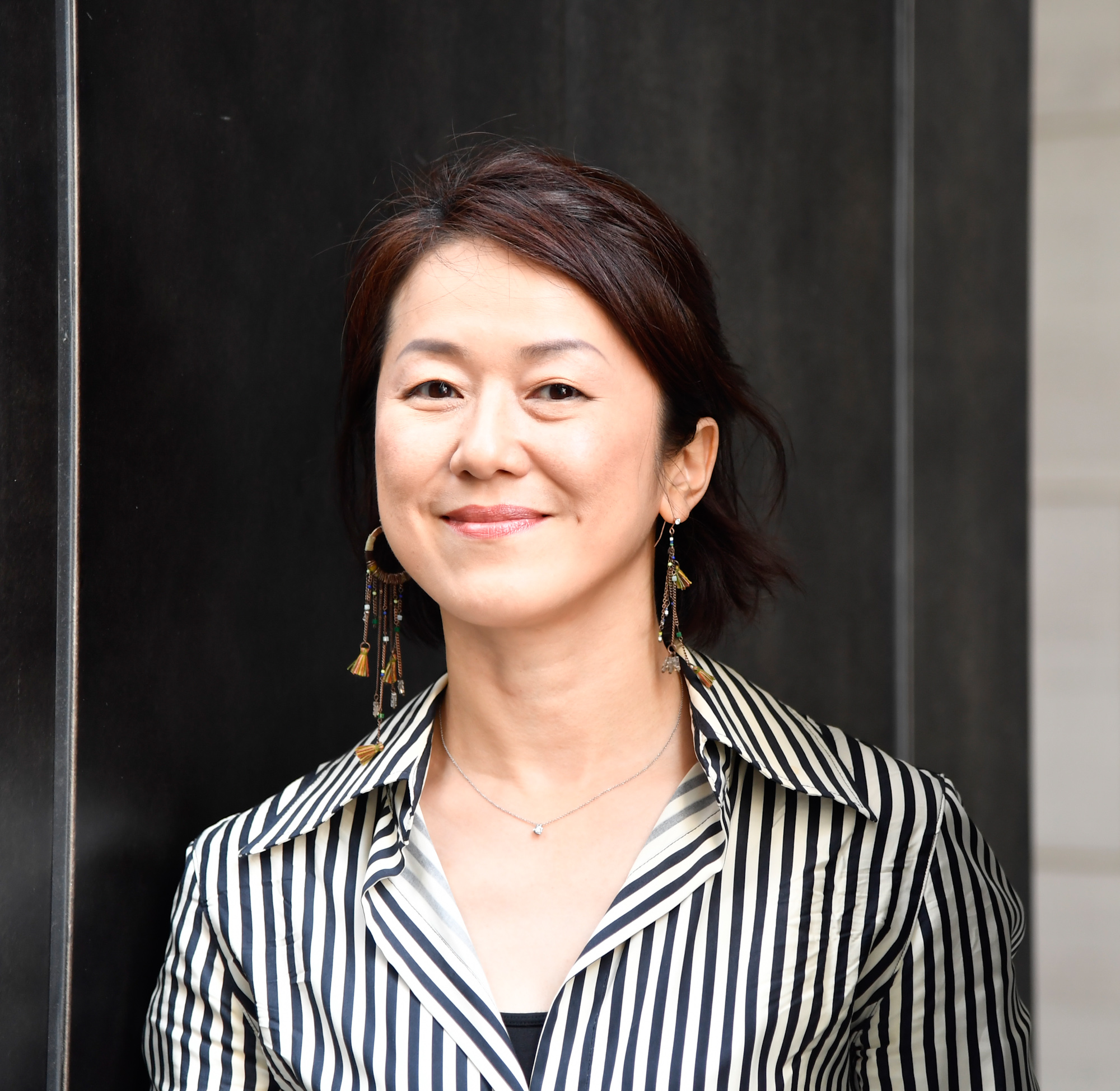
Born in Hiroshima in 1972, and spent approximately five years in New York through the Agency for Cultural Affairs’ Program of Overseas Study for Upcoming Artists, beginning in 2007. Since 2013, Fujioka has been based in her hometown of Hiroshima. She won a number of accolades, including the Kimura Ihei Award, for Here Goes River (Akaaka Art Publishing Inc), a publication of collected photography that captures present-day Hiroshima seventy years after the end of the war. Fujioka has presented work extensively both in Japan and abroad, participating in the 2021 Countermeasures Against Awkward Discourses exhibition at the 21st Century Museum of Contemporary Art, Kanazawa, and in group shows at SEIZAN Gallery New York in 2023 and 2024. Her work is held in the collection of the San Francisco Museum of Modern Art. Major publications of collected photography include I don’t sleep (Akaaka Art Publishing Inc), Comment te dire adieu (Ricochet), and Life Studies (Akaaka Art Publishing Inc). In July 2026, the book and exhibition I’m So Happy You Are Here: Japanese Women Photographers from the 1950s to Now—originally published in English and French last year and having attracted 140,000 visitors at the Rencontres d’Arles international photography festival—will tour Japan in an expanded form under the title Manazashi no kiseki: Nihon josei shashinka no bōken [Miracle of the gaze: adventures of Japanese women photographers] with Fujioka added to the lineup of exhibiting artists. She is a lecturer at Kyoto University of the Arts.
Information
2026.10.14. WED- 11.29. SUN
11:00 – 19:00
Tuesdays
*Closed on 8th November
Free
BUG

